My Problem with Finishing Things

If you were to walk into my studio and open the back cabinet that I usually keep closed, you’d find something I’m a little embarrassed by:
Seventeen half-finished – rather, half-started – journals and sketchbooks. Ideas, motivations, and inspirations that I was once so excited to create and contribute to, all of which fizzled out into nothing.
These journals are from different points in my life, each with a different intention. A 2018 bullet journal from when I saw aesthetic bujos all over Instagram and wanted to organize my life in a beautiful way too – before realizing how much effort it actually takes to make those spreads. A sketchbook from an eager architecture student, filled with half-formed thoughts, sketches, and drawings. A grimoire to document all of the witchy things I was doing and learning.
They’re all versions of me documented in paper – past selves that were really excited about beginning a new journal but didn’t have the energy to finish. I will never go back to these journals, and deep down, those blank pages torment me. I know I shouldn’t feel ashamed of the incomplete journals. I also know that starting again in the middle of a journal isn’t actually a big deal. And yet, it still feels wrong, the ultimate sin. So the journals stay where they are: closed and tucked away.
This isn’t a habit isolated to my journals and sketchbooks. If you step outside of the hideaway cabinet and look at the rest of my life, this pattern shows up everywhere. It’s in my 95%-complete kitchen remodel. The painted stairway ceiling that doesn’t quite meet the edges of the wall because I didn’t have a ladder tall enough to finish it. Hell, even the hundreds of books I’ve purchased that I tell myself I’ll read someday and then never get to.
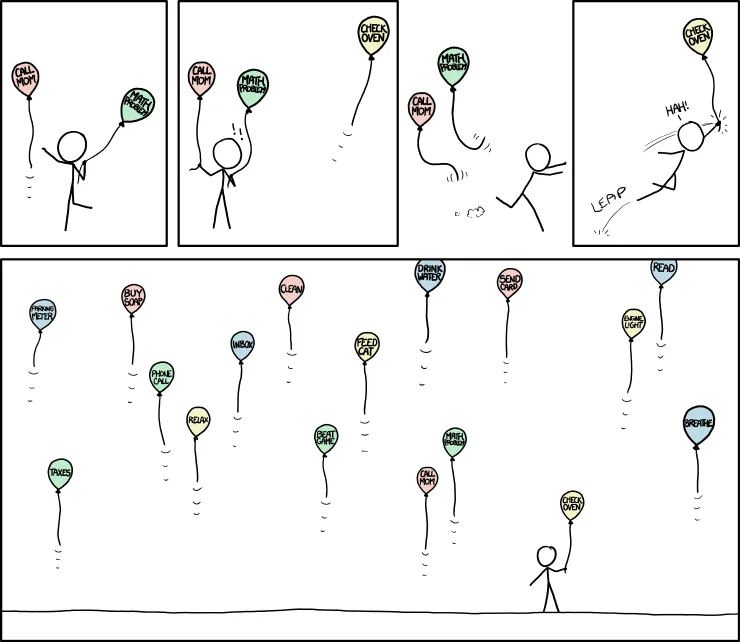
While I’m learning to be gentler with myself, I have to be honest about the toll this cycle takes. There is a net negative effect, that is putting a cumulative drain on my resources.
At some point, I realized this isn’t a problem with my journals or my books. It’s a “me” problem.
When I have a new idea or project, I get really excited about it. I obsess over every little detail, research everything, and deep dive into the nitty-gritty. Sometimes that means spending money, because if I’m going to do something, I want to do it well and with the best tools. After all the research and gathering what I need, I’m ready to begin. Or so I think…
When I hit the first bit of friction, it’s over. I don’t know where to start, or it suddenly feels bigger than I expected. So I push it off just a bit longer. Give myself enough time to watch a few more YouTube videos, find more ideas online. I tell myself I’ll start soon. And sometimes I do. But the moment it gets harder than I expected, something shifts in me. One thought is enough – this looks like crap – and all of that excitement and obsession I was feeling is instantly dismantled in a second.
“But that’s ok, because I just saw a cool craft on TikTok I want to try.”
Something better, something easier. This one will definitely be the thing I stick with…
Perfectionism manifests in almost everything that I do, and I think this is one of the main reasons so many of my projects never make it past the beginning stages. In my mind, I have a very clear idea of what something should look like. Achieving anything less than that ideal feels like failure.
Logically, yes I understand that I can’t just pick up a new hobby and be the best at it. It takes time, practice, and lots and lots of failures to get something to the point of “perfection.” But that doesn’t seem to matter in the moment. My brain still expects me to do it right on the first try. That expectation creates a few predictable outcomes:
Perfectionism creates a standard that I am not able to meet, and probably would never be able to meet even with enough time and energy. As a result, I procrastinate, postpone, and defer my goals out of fear and shame of doing something imperfectly.
I keep calling this perfectionism, but that doesn’t explain everything. There are plenty of moments where I stop and it has nothing to do with something being “not good enough”. It’s more subtle than that.

Thinking back to my half-finished journals, I was genuinely excited to start them. I made it a third-, sometimes half-way though. And then at some point it stopped feeling new, and the novelty wore off. Something else took it’s place: boredom, distraction, a new idea that felt more interesting, exciting, or easier.
I can’t always tell if I’ve genuinely lost interest or if the hobby was just more difficult than I expected. Those two things can sometimes feel identical in the moment. It’s not like I sit there and think “This is boring, I’m going to stop.” It’s quieter than that, deep in the backrooms of my consciousness. I will hit a point where I don’t immediately know what to do next. One single hesitation and my attention shifts. I’ll look at my phone, open social media, and get quick dopamine hits from others who have actually done the hard work.
Just like that, I’m gone and I can’t get back. It is easy to choose the route of fast-dopamine and continuous attention-grabbing videos, but you don’t get much out of it. Maybe ideas and laughs, but nothing tangible or rewarding. Just a laundry list of screenshots and “someday-maybe” projects that get added to the pile.
Knowing the cause of my problem is helpful, but it is still really difficult to get past the emotions and shift to actually making progress. There is still a layer of shame around the unfinished thing, a mental weight of all the things that are left undone, weighing down on me like an anchor.

When I was doing therapy, I worked on my own internalized shame, especially from childhood memories. Funnily enough, before I went to therapy, I don’t think I had a good understanding on what shame actually was. Between the alexithymia and growing up with all brothers, I learned to hid my feelings rather than express or identify them. Putting a name to that feeling was the first step in breaking its power.
Brene Brown defines shame as “the intensely painful feeling or experience of believing that we are flawed and therefore unworthy of love and belonging - something we’ve experienced, done, or failed to do makes us unworthy of connection.” (Via: Shame vs. Guilt - Brené Brown). Framing things that we’ve failed to do through a lens of shame doesn’t lead to meaningful progress, because it always circles back to something inherent about ourselves that cannot be separated from the situation. It always comes back to us. I failed, I procrastinated, I am bad.
To move forward, I’ve had to practice reframing my “shame talk” into “scenario talk“, where blame shifts away from the self and towards the scenario. For instance:

I also need to be okay with leaving things unfinished. Not finishing a task should not automatically mean failure. I’ve started categorizing my “unfinished pile” into three groups to help me decide what actually deserves my energy:
So, how do I distinguish between a project that’s ok to drop and one that deserves a push? I’ve started asking myself three questions:
Starting the thing has inherent value. It is okay – perhaps even more interesting – to be a “jack of all trades, master of none.” I think the goal shouldn’t be to finish everything but to have experiences that actually fulfill your life. When you leave things unfinished that are not going to fulfill you, it creates space for the things that will.
I know there is a tension between the claims that “unfinished things are okay” and “I want to finish more things that matter.” I’ve realized that I don’t need to finish everything to be worthy, but I do want the capacity to stay with the things that matter. Completion shouldn’t be a tax I pay to feel like a valid adult; it’s a muscle I want to strengthen so that when I find a project that truly resonates, I have the endurance to see it through.
While I tend focus on what’s unfinished, there are still a lot of things in life that I do complete without thinking twice. It is so easy to focus on the negatives, but when I take step back, I can actually be proud of what I have done. Even so, I do want to make changes to my approach and mindset.
In the near future, I’m going to try a few experiments:
My past incompletions are not failures, they’re just records of what I’ve explored. It is okay to be imperfect. It is ok to be unfinished. My life is meant for living, and I can’t expect that everything I do be done perfectly. I still have work to do around shame, guilt, and perfectionism, but I am learning. I am making progress, and that is enough.